1. Identity and documents
The deceased person is identified and available documents are checked before preservation work begins.
Most families first hear about embalming when a loved one has to be transported by flight, kept for relatives to arrive, or moved over a long distance. This blog explains what embalming means, when it is required, when it is not required, and what documents are usually involved in Bangalore.
For dead body air transport from Bangalore, embalming is normally mandatory. For most long-distance road transport cases, embalming is usually not required if a proper freezer ambulance is arranged.
| Situation | Is Embalming Usually Needed? | Practical Explanation |
|---|---|---|
| Domestic air transport from BLR Cargo | Yes | Airlines and cargo teams generally require embalming certificate and coffin certificate before accepting human remains. |
| International repatriation | Yes | International movement needs stricter preservation, sealed coffin packing and documentation. |
| Long-distance road transport | Rarely | In most cases, a freezer ambulance is enough. Embalming is considered only for severe delay, body condition concerns or special legal/medical guidance. |
| Waiting several days for relatives | Sometimes recommended | Embalming with mortuary refrigeration can be more reliable for extended waiting. |
| Immediate local cremation | No | If final rites happen quickly, embalming is usually not required. |
The goal is not to push embalming in every case. The goal is to help families understand when embalming is legally required, medically useful or unnecessary.
Embalming is a preservation procedure used after death to delay decomposition and keep the body suitable for transportation or viewing for a limited period. Modern embalming focuses on three main purposes:
Historically, preservation of human remains has existed across many cultures. Modern embalming is different from ancient mummification because it normally uses controlled chemical preservation methods rather than ritual drying or mummification.
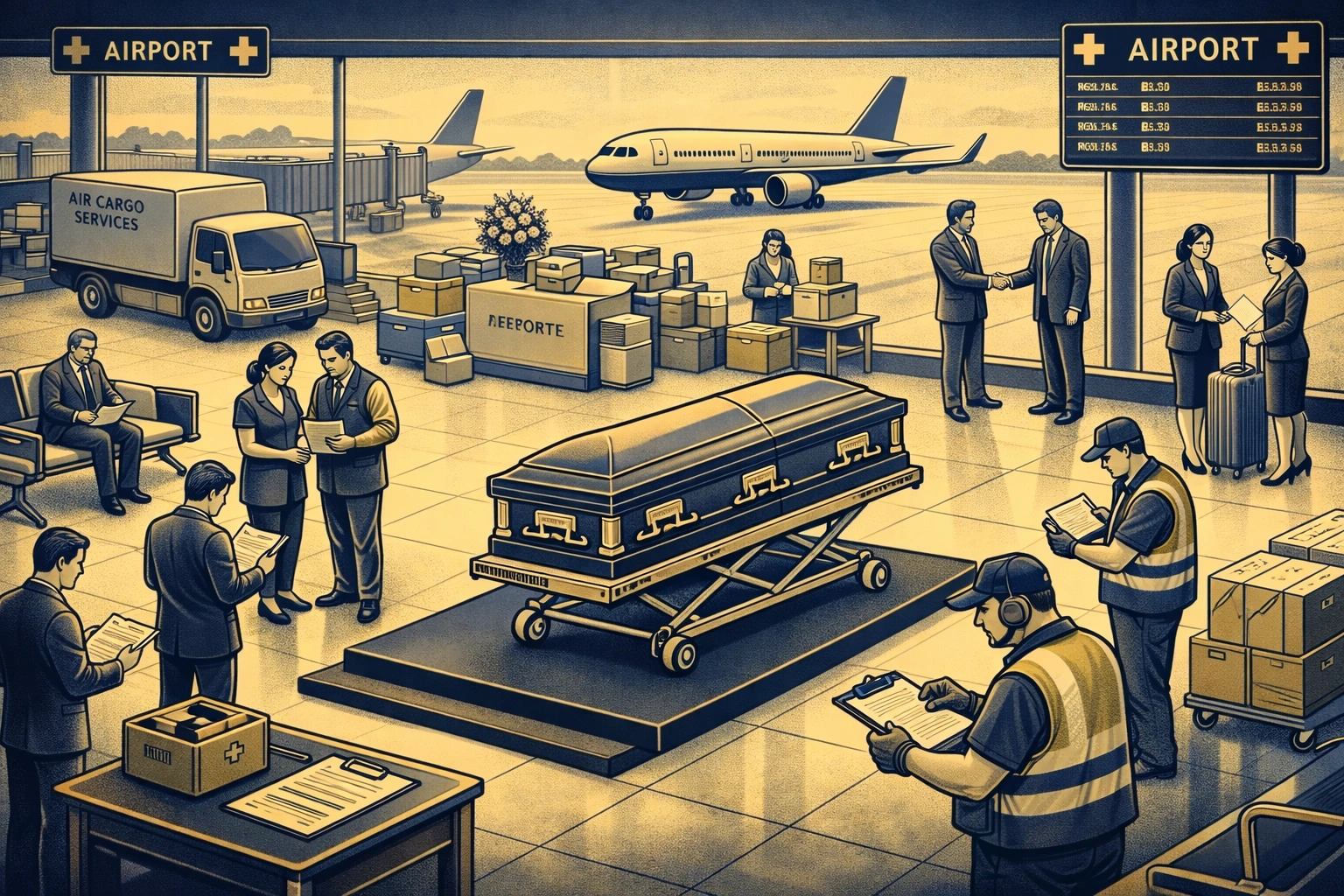
This is a family-friendly overview. Actual medical handling should be done only by qualified professionals in an approved hospital, mortuary or authorized facility.
The deceased person is identified and available documents are checked before preservation work begins.
The body is cleaned, positioned and assessed for condition, time since death and preservation needs.
Preservative fluid is introduced through the vascular system to delay decomposition and improve preservation.
Depending on the case, cavity treatment or surface treatment may be done by the professional handling the procedure.
The body is prepared respectfully for viewing, coffin packing or movement as required by the family and documentation process.
An embalming certificate is issued with facility, doctor or authorized professional details. This certificate is important for air cargo.
When a deceased person has to be transported by flight from Kempegowda International Airport, the body is usually moved through BLR Cargo procedures, not as normal passenger baggage. Airlines and cargo teams require preservation and documentation because human remains may pass through multiple handling points before reaching the destination.
Airlines and airport cargo teams generally refuse unembalmed bodies for flight movement because transit time, temperature changes, handling delays and public health standards must be controlled.
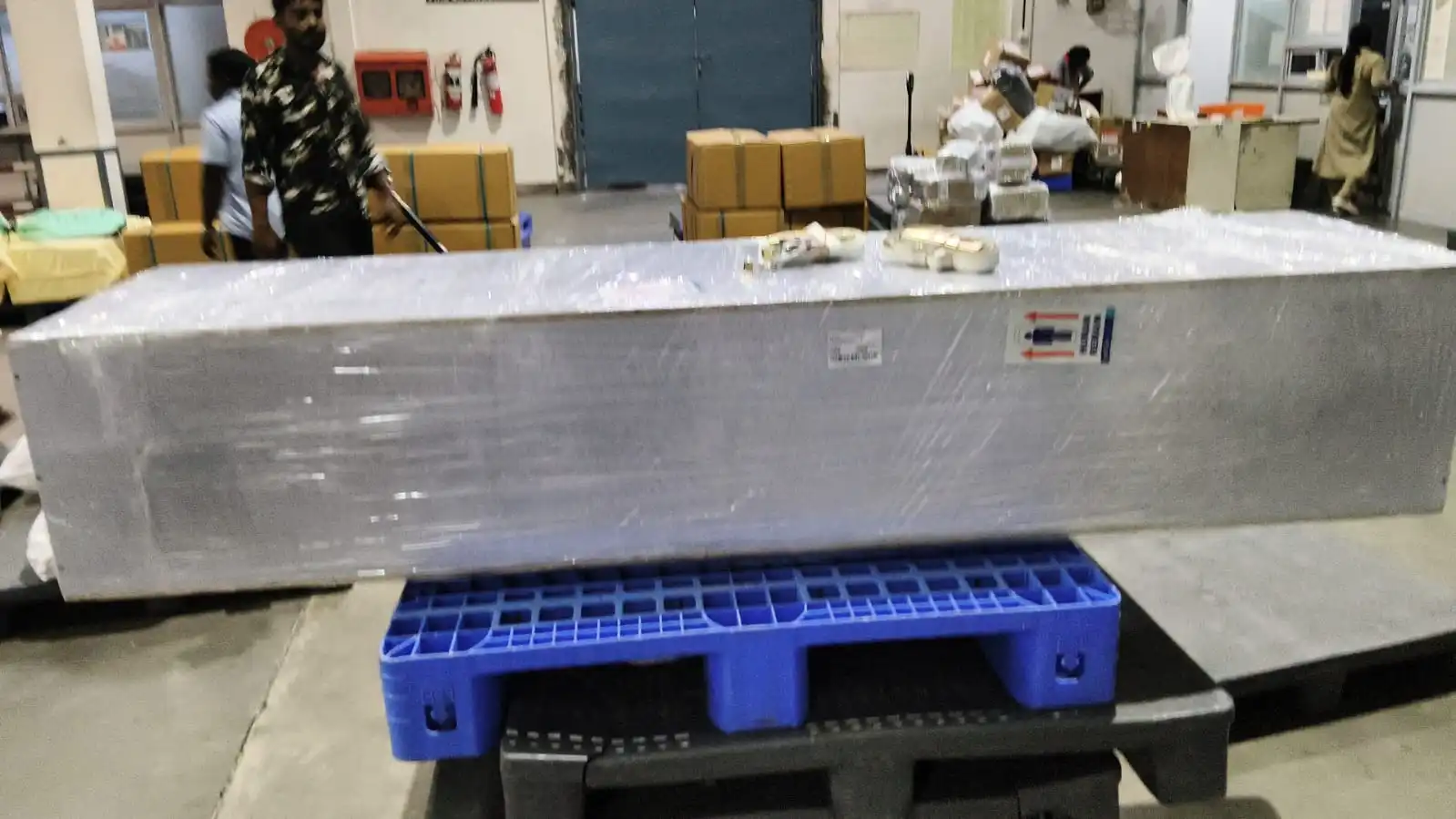
Exact requirements can change based on airline, destination, death type and airport/cargo instructions. Families should verify with the airline or cargo coordinator before dispatch.
This is the biggest misunderstanding families face. If the body is being shifted by road from Bangalore to another city or state, embalming is not automatically mandatory.
In about 95% of practical long-distance road transport cases, a properly arranged freezer ambulance is sufficient, especially when the body is moved within a reasonable timeline and final rites happen soon after arrival.
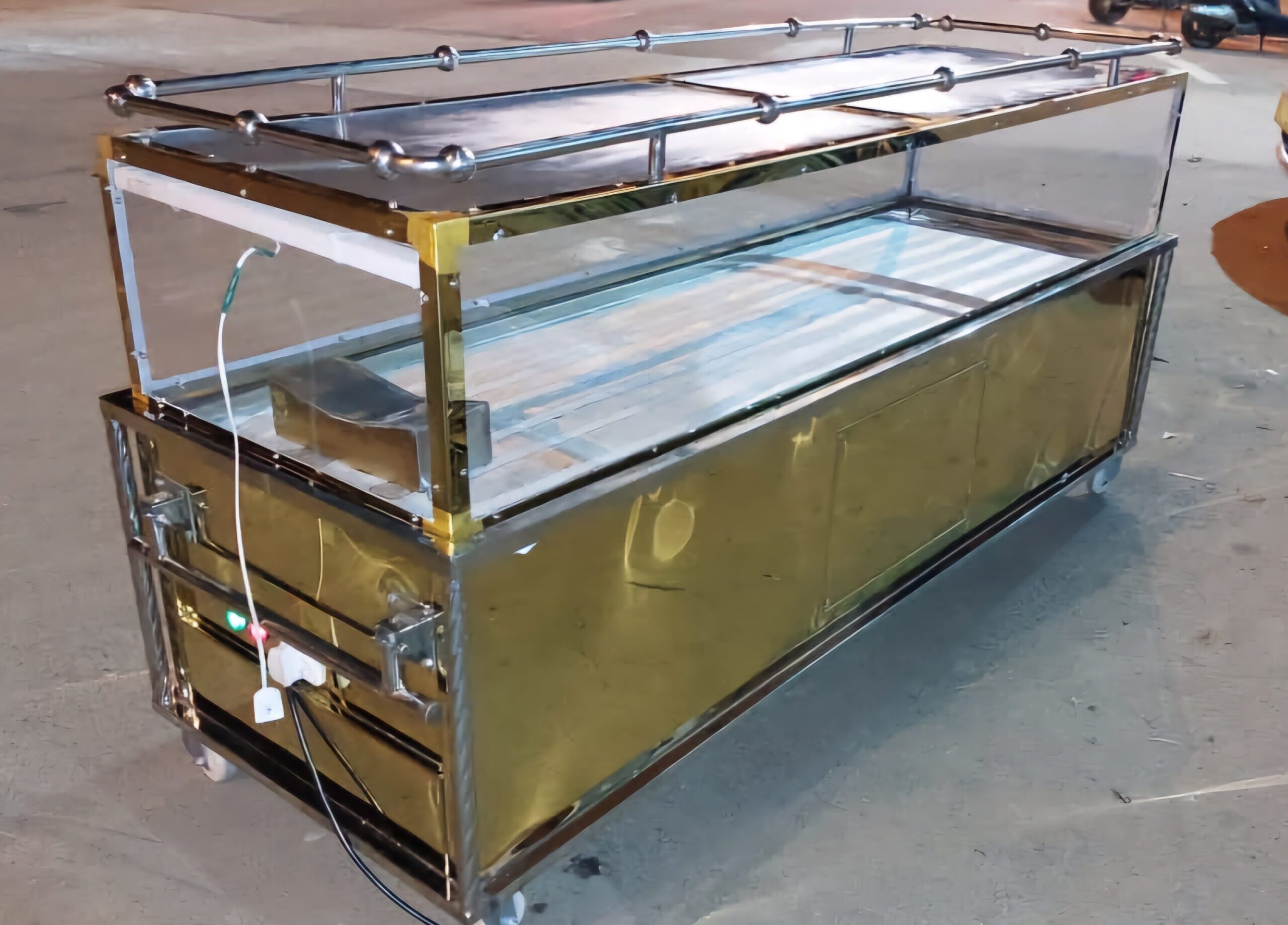
These options are often confused. They solve different problems.
| Option | How it works | Best use | Limitation |
|---|---|---|---|
| Embalming | Chemical preservation to slow decomposition and improve hygiene. | Air cargo, international repatriation, extended delay. | Requires authorized facility and certificate; not needed for every road case. |
| Freezer ambulance | Cooling support during road movement. | Long-distance road transport from Bangalore to native place. | Depends on vehicle availability and route planning. |
| Freezer box | Stationary cooling at home or facility before transport. | Waiting at home before final rites or before road dispatch. | Needs power and is not a substitute for air cargo embalming. |
| Mortuary refrigeration | Cold storage in hospital or mortuary. | Waiting for documents, relatives or scheduled transport. | Availability depends on facility and timing. |
There is no fixed answer for every case. Preservation depends on body condition, temperature, humidity, time since death, quality of embalming and whether refrigeration is also used.
For short waiting periods, a freezer box or mortuary refrigeration may be enough, especially if no flight transport is involved.
When relatives are arriving from abroad or final rites are delayed, embalming with refrigeration is often more reliable.
For flight movement, the key issue is not only duration; it is airline acceptance, certificate validity and safe handling during transit.
The typical embalming cost in Bangalore is approximately ₹10,000 to ₹20,000. This is not a fixed price because the final cost depends on the case and facility.

No. It is usually required for air transport, but rarely required for ordinary road transport when a freezer ambulance is used.
No. A freezer box slows decomposition by cooling. Embalming uses chemical preservation.
No. It delays decomposition. Storage condition and time still matter.
Usually no. Coffin packing is mostly connected to airline cargo procedures.
No. Airlines usually check proper embalming certificate and coffin certificate details.
Not always. Very long routes may need comparison between road ambulance and air cargo process.
If a family is arranging flight transport from Bangalore, the confusing part is usually not only embalming. It is the full chain: death certificate, embalming certificate, coffin certificate, cargo booking, airline timing and destination handover.