Dead Body Transport by Road from Bangalore
Direct ambulance, hearse van and freezer vehicle support from Bangalore hospitals, homes and mortuaries to native places across Karnataka and India. Get suitable vehicle guidance, upfront pricing, family travel support and destination handover planning.
What the family can confirm before dispatch
Normal Force ambulance, AC vehicle or freezer support based on journey risk, not only distance.
Local start price, per-km slabs, return distance, advance, fuel collection and odometer method explained.
When embalming, freezer box at home or freezer vehicle becomes sensible for long or delayed movement.
Why many families prefer road when three to four close relatives need to travel with the vehicle.
How outstation road transfer is arranged from Bangalore
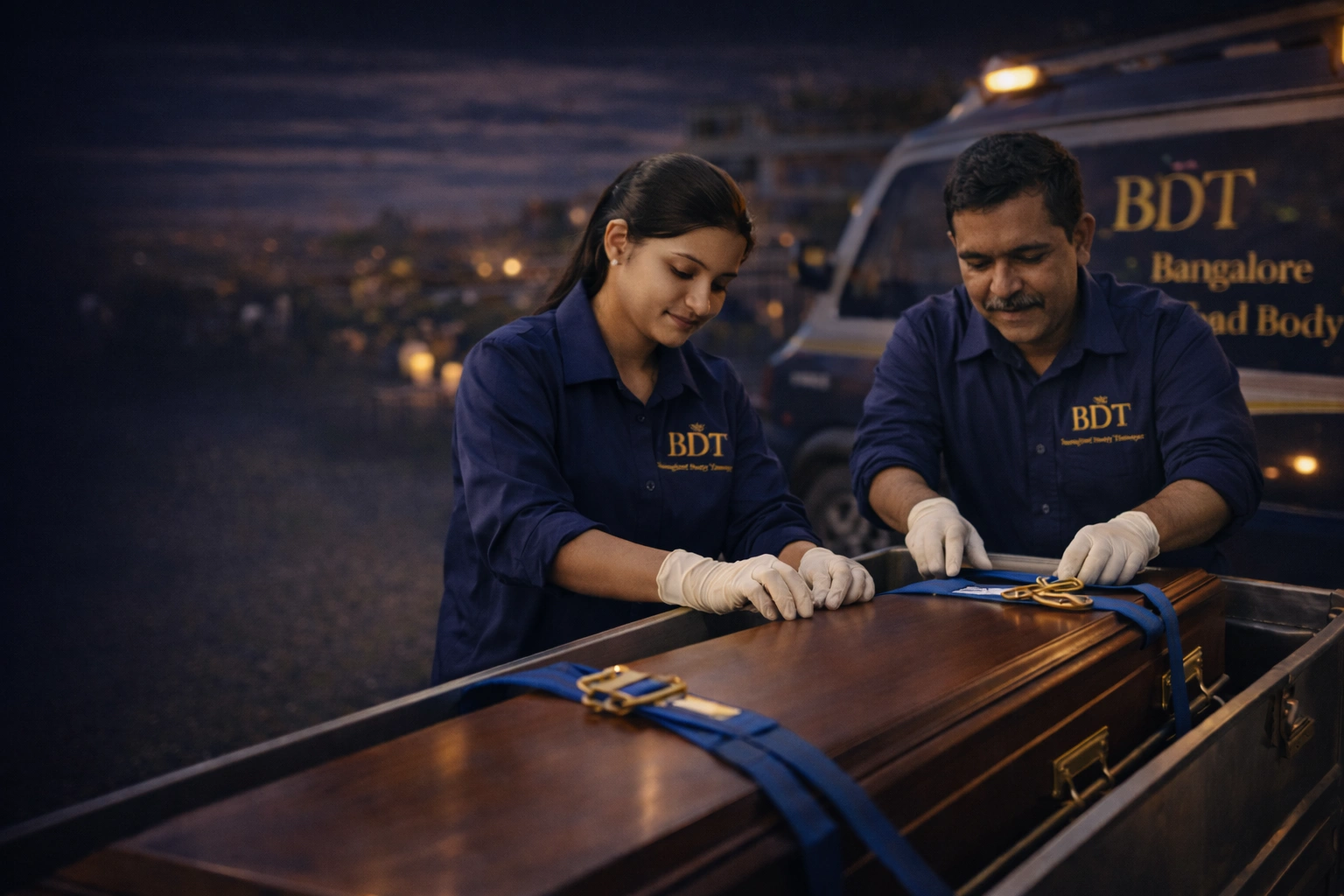
After a death at a hospital, home, care facility or mortuary in Bangalore, the family shares the pickup point, destination, body condition, release timing and whether relatives will travel. BDT then suggests the suitable road vehicle, gives a written or clearly confirmed quote, collects a small advance, records the starting odometer, completes respectful placement and begins the journey with updates.
- 1Local Bangalore ambulance / hearse movement starts from ₹3,000, depending on route, waiting, vehicle and manpower need.
- 2Applicable outstation movement above 200 km one side is usually quoted per kilometre with return distance considered because the vehicle and driver must return after handover.
- 3Starting rates: normal Force ambulance from ₹23/km, AC vehicle from ₹25/km and AC freezer vehicle from ₹28/km, negotiable depending on total route and planning.
- 4No hidden charge approach: tolls, waiting, route difficulty, night movement, freezer need, extra manpower and other known items are discussed before dispatch wherever applicable.
Usually 10% to 20% minimum before vehicle dispatch.
For long trips, agreed part payment may be collected on the way for fuel.
Final amount is calculated from odometer readings and agreed rate.
Three to four relatives may travel depending on vehicle layout and luggage.
Hospital, home and mortuary pickup planning in Bangalore
A strong road transfer starts before the vehicle reaches the gate. In Bangalore, the practical work is usually around death papers, mortuary timing, hospital release counter, family ID proof, body condition, parking access and the destination handover person. BDT can coordinate pickup timing from government and private institutions such as Victoria Hospital, NIMHANS, St. John’s Medical College Hospital, Manipal Hospital and similar Bangalore hospitals once the family has the required release approval from the concerned hospital or authority.
Release desk and mortuary timing
Confirm whether the body is in ward, ICU, emergency, casualty or mortuary. Ask when documents will be ready, who signs the release and where the ambulance can enter.
- Keep attendant phone number active.
- Share hospital block or gate clearly.
- Check if payment clearance is pending.
Doctor certificate and respectful pickup
For home deaths, the family usually needs a doctor’s certification and local death reporting guidance. The vehicle team should know floor level, lift access, staircase width and whether extra manpower is needed.
- Share exact building landmark.
- Tell if service lift is available.
- Keep ID proof ready.
Police and post-mortem clearance
Accident, suicide, suspicious death or police case movement may need post-mortem papers and police clearance before road transfer. Vehicle dispatch should be timed after legal release is likely.
- Do not rush before clearance.
- Carry all police papers.
- Share receiving person details.
Typical road transfer situations handled from Bangalore
Every case is different, but most urgent road movements from Bangalore fall into a few practical situations. These examples are written without personal details so families can understand how vehicle choice, preservation and billing decisions are normally made.
Bangalore hospital release to Karnataka town
The family receives hospital release papers, confirms the destination contact and chooses a normal or AC vehicle depending on travel time, weather and final rites timing.
- Useful when rites are planned soon after arrival.
- Pickup gate and mortuary timing are confirmed first.
- Starting odometer is shared before departure.
Home waiting before outstation movement
When relatives need time to arrive in Bangalore before the road journey, a freezer box may be arranged first and the road vehicle can be dispatched after the family is ready.
- Helpful during summer or humid weather.
- Reduces pressure on the family.
- Vehicle timing can be planned after documents are ready.
Long movement with family members travelling
For UP, Bihar, Jharkhand, Odisha, Bengal or North East-side movement, families often choose road when close relatives want to travel together and reach the native place directly.
- Freezer vehicle is preferred for long uncertainty.
- Food, medicines and rest stops should be planned.
- Route and fuel support are discussed before dispatch.
Road ambulance and hearse pricing from Bangalore
The price should not be explained only as a number per kilometre. Families need to know the vehicle type, total route, return distance, pickup waiting, destination access, night driving, fuel planning, freezer requirement and whether extra manpower is needed. The team gives the quote before dispatch and explains known charges clearly before the vehicle starts.
| Requirement | Starting guidance | Best suited for | Important note |
|---|---|---|---|
| Local Bangalore ambulance / hearse | Starts from ₹3,000 | Hospital to home, home to crematorium, mortuary to crematorium, or short local movement. | Varies by pickup area, waiting, building access, vehicle and manpower. |
| Normal Force ambulance | Starts from ₹23/km | Controlled short or same-day outstation movement where AC/freezer is not required. | Applicable mainly for distance above 200 km one side, with return distance considered. |
| AC hearse / AC road ambulance | Starts from ₹25/km | Longer Karnataka corridors, warm weather, relatives travelling and journeys needing cabin comfort. | AC improves comfort and temperature control; it is not the same as active freezer preservation. |
| AC freezer vehicle | Starts from ₹28/km | Overnight, interstate, humid, hot, delayed or long-haul movement where body condition must be protected. | Recommended when travel time, weather, route uncertainty or delayed rituals increase preservation risk. |
Rate, vehicle type, return distance basis, known extras and advance are explained before the vehicle is sent.
Long-distance pricing may be adjusted depending on distance, timing, availability and route practicality.
For long journeys, fuel support on the way may be collected as agreed, especially where diesel cost is high.
Starting and ending odometer readings help the family understand the final distance used for billing.
Why two-way distance and odometer reading matter
In outstation deceased transfer, the vehicle is not like a one-way taxi that immediately gets another booking from the destination. The ambulance or hearse, driver and support team are reserved for the family and must return after handover. That is why return distance is considered in the calculation, especially for long intercity and interstate travel.
Simple billing method
Final bill is usually calculated from the agreed per-km rate, actual odometer readings, return-distance basis and pre-agreed items such as waiting, tolls, special manpower, freezer support or night movement where applicable.
What family should ask
Ask for the starting odometer reading, expected route, rate per km, included items, advance paid, on-the-way fuel amount and final reading method before the vehicle starts.
How to choose between normal, AC and freezer road vehicles
Vehicle choice should be based on body condition, expected travel time, release delay, weather, destination access, family travel needs and whether final rites will happen immediately after arrival. Distance is only one factor; a shorter journey during peak summer with long hospital waiting can need more care than a longer but well-planned night journey in cooler weather.
Controlled, shorter and faster movement
Suitable when the route is manageable, weather is favourable, release is quick and final rites can happen soon after arrival.
- Lower cost option.
- Useful for planned same-day movement.
- Not ideal for high heat, delays or very long travel.
Better comfort and cabin control
Helpful when close relatives travel with the vehicle, the route is longer, weather is warm or the family wants a calmer journey with better cabin conditions.
- Useful for daytime travel.
- Helpful for elders travelling.
- Improves comfort but does not freeze.
Preferred for long or uncertain journeys
Recommended when travel may extend overnight, destination rituals are delayed, weather is hot or humid, or the route crosses multiple states.
- Best preservation support.
- Useful for long-haul trips.
- Helpful when arrival time is uncertain.
Common road movement directions from Bangalore
For Karnataka movement, families usually think about the native place, road condition, family arrival time and whether the body can be taken directly home before cremation or burial. The planning below groups common movement patterns by practical road corridor.
Support is available towards South Karnataka, coastal Karnataka, central Karnataka, North Karnataka and border-side towns based on vehicle availability, pickup time, destination access and preservation need.
South Karnataka and Mysuru side
Mysuru, Mandya, Ramanagara, Chamarajanagar, Hassan, Kodagu and surrounding native-place routes.
Planning focus: city exit timing, home handover, crematorium or burial ground timing, and whether relatives will travel.Coastal and Western Ghats side
Mangaluru, Udupi, Karwar, Chikkamagaluru, Shivamogga and ghat-connected regions.
Planning focus: humidity, monsoon, ghat speed, night visibility and whether AC/freezer support is advisable.Central and North Karnataka side
Tumakuru, Chitradurga, Davanagere, Haveri, Gadag, Dharwad, Hubballi, Belagavi, Ballari, Bagalkote and Vijayapura belt.
Planning focus: highway timing, fuel stops, night movement, long return distance and receiving-person coordination.Kalyana Karnataka and border movement
Kalaburagi, Bidar, Raichur, Yadgir, Koppal, Vijayanagara and connected Andhra, Telangana or Maharashtra-side routes.
Planning focus: heat exposure, longer travel time, village approach roads, interstate planning and freezer decision.Planning long-distance movement to North, East and North East India
Families sometimes choose road even for long routes because three to four relatives can travel together, the vehicle can reach the native place directly, and the family avoids airline cargo procedures. For very long routes, the decision should be based on preservation risk, family comfort, route safety and realistic arrival time, not only on lowest per-km pricing.
| Interstate direction | Common planning concern | Vehicle guidance | Family preparation |
|---|---|---|---|
| Andhra Pradesh / Telangana / Tamil Nadu / Kerala | State border timing, city exit traffic, ghat or coastal humidity depending on destination. | Normal, AC or freezer based on heat, timing and final rites plan. | Share exact town, landmark, receiving person and local ritual timing. |
| Maharashtra / Goa side | Long highway stretches, night driving decisions, tolls, weather and destination approach. | AC or freezer is often considered when movement extends overnight. | Keep route contact active and plan food, water and medicines for travelling relatives. |
| Uttar Pradesh / Bihar | Very long travel, driver fatigue, fog in winter, heat in summer and delayed village access. | Freezer vehicle is usually preferred for dignity and preservation. | Plan realistic arrival windows and keep all documents accessible. |
| Jharkhand / Odisha / West Bengal | Heat, humidity, diversions, city bypasses and rural approach roads. | Choose based on preservation risk and not only cost difference. | Confirm whether road-only or air-plus-road is more practical. |
| Assam and North East side | Very long travel, changing terrain, uncertain timings and multi-state movement. | Freezer support and careful route planning are strongly preferred if road is chosen. | Compare full road movement against air cargo plus destination-side road transfer. |
Bangalore hospital to North Karnataka native place
Usually focus on release timing, night highway safety, family seating and whether arrival will be same day or next morning.
Bangalore to coastal hometown
Humidity, ghats, monsoon and destination handover timing decide whether AC or freezer support is safer.
Bangalore to North India
Long-distance preservation, fuel planning, rest breaks, documents and realistic ETA matter more than aggressive speed.
Embalming, freezer box and freezer vehicle guidance
Embalming is not mandatory for every road journey. Short and controlled road transfer can often be managed with timely pickup, respectful handling and quick final rites. For long journeys, delayed rituals, summer heat, coastal humidity, hospital release delays or 24 to 48 hour movement, embalming may be preferred to support preservation and dignity.
Before dispatch delay
Use a freezer box in Bangalore if the family must wait at home before road movement.
Warm or humid route
AC improves cabin conditions, but freezer support is safer when route timing or weather is uncertain.
Overnight movement
Freezer vehicle becomes more useful when arrival is next day or rituals may not start immediately.
Very long transfer
For UP, Bihar, Jharkhand, West Bengal or North East side, compare freezer road vehicle with air-plus-road option.
Heat increases risk
High temperature, city traffic and long daytime travel can affect body condition. Freezer support should be considered earlier.
Humidity needs control
Coastal routes require careful handling, minimal opening, faster handover and proper vehicle selection.
Fog affects ETA
Winter fog can slow North India movement. Safe driving margins are better than forcing continuous high-speed travel.
Documents usually needed before road transfer
Road movement is simpler than air cargo movement, but the family should still keep death-related documents ready. Requirements can change depending on hospital death, home death, police case, post-mortem case, destination state and local cremation or burial rules.
| Situation | Common document or proof | Why it matters | Practical note |
|---|---|---|---|
| Hospital death | Hospital death summary, release note and Medical Certificate of Cause of Death where issued. | Confirms hospital release and cause certification process. | Ask the hospital which counter gives final release papers. |
| Home death | Doctor certification and local death reporting guidance. | Helps with registration and lawful movement. | Do not move the body before the family understands local instruction. |
| Medico-legal case | Police papers, post-mortem report/release note and NOC if required. | Required when death is accidental, suspicious or under investigation. | Vehicle should be dispatched after release timing is reasonably clear. |
| Destination rites | ID proof, relationship details and receiving person contact. | Helps local cremation, burial or community handover. | Keep original and phone copies ready during travel. |
Sanitized vehicles, respectful handling and safer travel
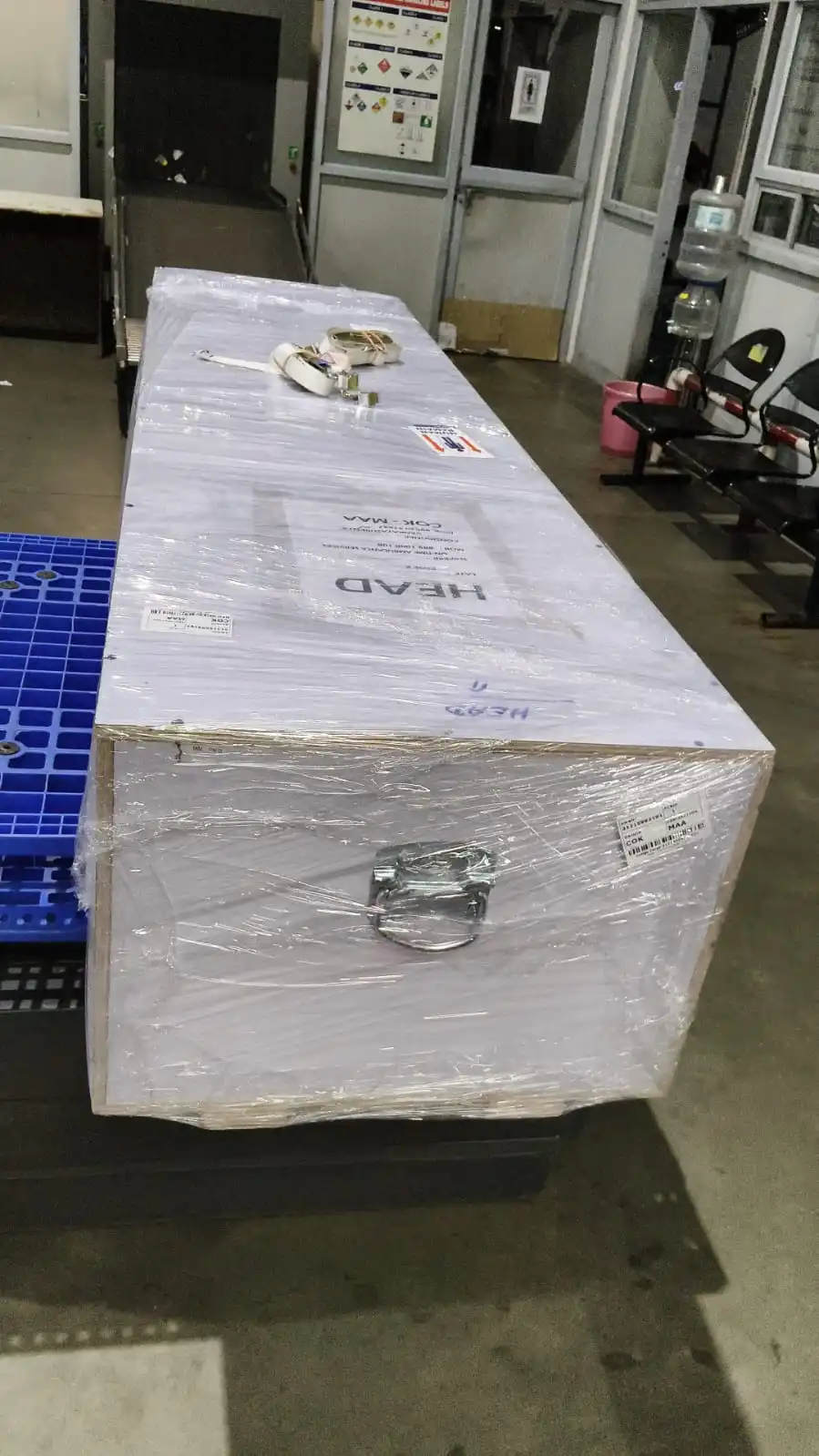
BDT vehicles are maintained, cleaned and sanitized after every ride and checked again before dispatch. The team should avoid unnecessary opening, rough movement, crowding around the body and last-minute confusion at hospital gates. For infectious or medico-legal cases, the family must follow hospital and authority guidance on handling and release.
Vehicle platform, covering, stretcher area and route readiness are checked.
Vehicle interior is cleaned and sanitized before the next family is served.
Stops are minimized and handling is kept dignified and calm.
Relatives travelling should carry water, medicines, ID proof and essential ritual items.
How the road transfer is arranged from Bangalore
Share details
Pickup point, destination, case type, release timing, body condition and family travel requirement.
Choose vehicle
Normal Force ambulance, AC vehicle or freezer vehicle based on route risk and budget.
Confirm quote
Rate, return-distance basis, advance, fuel collection and known extra items are explained.
Dispatch and pickup
Vehicle reaches hospital, home or mortuary after release timing and access details are clear.
Road movement
Driver shares route updates and manages fuel, toll and safe movement according to journey conditions.
Handover
Body is handed over to the family or receiving person; odometer-based final settlement is completed.
Related service options
No route-page links are added here because those child pages are not ready yet. This section links only to currently useful BDT pages so the guide stays clean, human and safe from doorway-page signals.
Road transport service
For Bangalore pickup and outstation road movement by hearse, ambulance or freezer vehicle.
Open road transport pageFreezer box service
Useful when the family needs home preservation before dispatch or before final rites.
Open freezer box pageHearse van service
For hospital-to-home, home-to-crematorium and local Bangalore movement.
Open hearse van pageAir transport from Bangalore
Compare road with air cargo when the destination is very far and flight movement may be faster.
Open air transport pageHelpful public references for families
These references support the documentation, vehicle-standard and safety context. BDT pricing and operational workflow are service-specific and should be confirmed with the family before dispatch.
Used for medical certificate of cause of death reference.
Used for Indian road ambulance standard context.
Used to keep dead-body handling statements careful and non-alarmist.
Helpful for confirming Karnataka administrative context.
Used for Bangalore hospital entity reference.
Used for Bangalore hospital entity reference.
Road transport questions from Bangalore
What is the starting price for road transport from Bangalore?
Local Bangalore ambulance or hearse movement starts from ₹3,000. For applicable outstation movement above 200 km one side, normal Force ambulance starts from ₹23/km, AC vehicle starts from ₹25/km and AC freezer vehicle starts from ₹28/km. Return distance is considered and the final price depends on route, timing, vehicle and agreed items.
Why is return distance charged?
The vehicle, driver and team are reserved for the family and must return after handover. For this reason, two-way distance is considered in long-distance billing.
How much advance is required before dispatch?
Usually 10% to 20% minimum advance is collected before dispatch. For long journeys, an agreed part payment may also be collected on the way for fuel and route expenses.
Is embalming mandatory for road transfer?
No. Embalming is not mandatory for every road journey. It is preferred for long movement, 24 to 48 hour delays, summer heat, humid routes, delayed rituals or cases where preservation risk is higher.
Can family members travel in the vehicle?
In many long vehicles, three to four close relatives can travel depending on seating, luggage, vehicle type and safety. The exact number should be confirmed before dispatch.
When should we choose a freezer vehicle?
A freezer vehicle is preferred when travel is very long, overnight, hot, humid, delayed or uncertain. It is also preferred when final rites may not happen immediately after arrival.
Can BDT pick up from Bangalore hospitals and mortuaries?
Yes, pickup can be coordinated from hospitals, homes, care facilities and mortuaries after the family receives the required release approval and documents from the concerned authority.
Is road better than air for very long distances?
Not always. Road is better when family members must travel together, the destination is a village, cargo timing is difficult or direct handover is needed. For very far destinations, air cargo plus destination-side road support may be faster and should be compared.
Need ambulance or hearse support from Bangalore?
Call with the pickup location, destination town or village, release timing, body condition and whether family members will travel. You will receive suitable vehicle guidance and upfront pricing before dispatch.